Be yourself; Everyone else is already taken.
— Oscar Wilde.
This is the first post on my new blog. I’m just getting this new blog going, so stay tuned for more. Subscribe below to get notified when I post new updates.
Be yourself; Everyone else is already taken.
— Oscar Wilde.
This is the first post on my new blog. I’m just getting this new blog going, so stay tuned for more. Subscribe below to get notified when I post new updates.
This semester we learned about many topics within Civic Media. Some important topics that were outlined this semester were mobilization and recruitment, clicktivism and KONY 2012, external and internal mobilization, various types of street art and activism, the walls of Buenos Aires, the Black Church’s role in providing support to the civil rights movement, hip-hop music in the Obama Era, celebrities and their roles in social movements, the LGBT movement, people falling into homelessness, and incarceration and its correlation with poverty. For the final project my group worked on the Me Too Movement. The Me Too movement has to do with raising awareness for those woman who have suffered from sexual harassment and sexual assault. I hope I can get involved with taking action in this movement to help young, beautiful strong women who have suffered from this sort of trauma. I believe it is very important to always be there for one another no matter what and always be kind because you never truly know what someone is going through. I always try and put my best foot forward and by getting more involved with this movement and raising awareness for these woman, I think it will put on a positive light for myself as well as the rest of the world that sees it.
https://drive.google.com/file/d/1tpf77AF6eHuNkR6drwebnWNg0IHyN28B/view
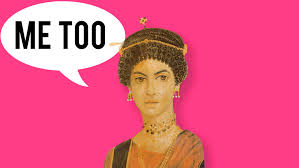
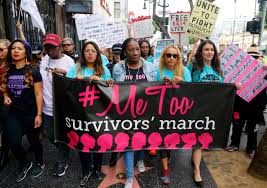
The “Me Too” movement is the biggest unearthed positive findings of the year and is deserving of the award from “Time Magazine” this is definitely the most devastating hidden behaviors living practically in all areas of social life, politics, work and entertainment exposure # 1
— Lester Zoom Headley (@ZoomLester) December 6, 2017
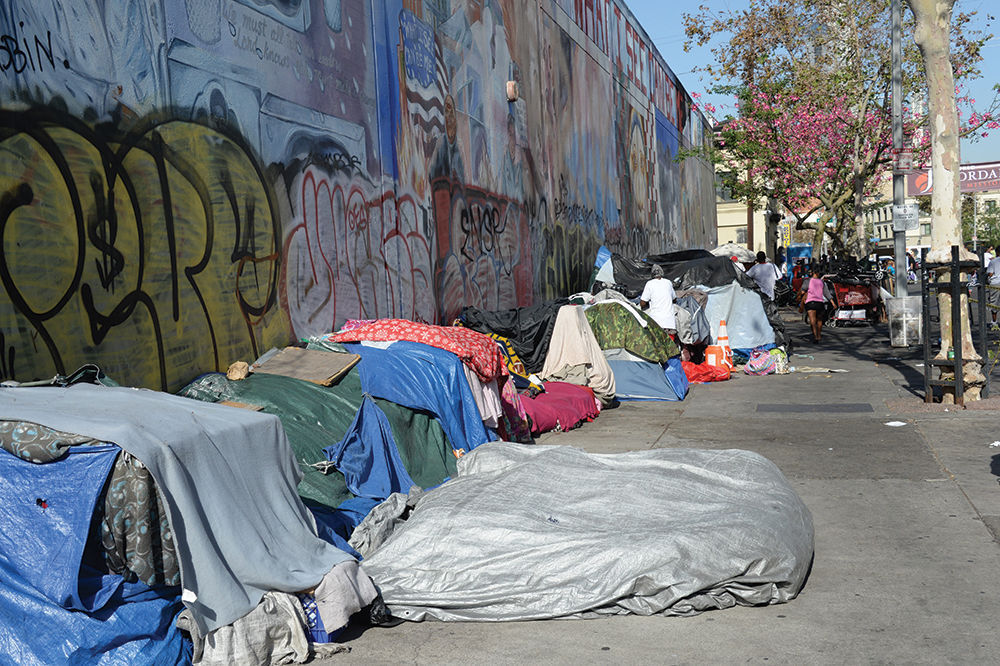
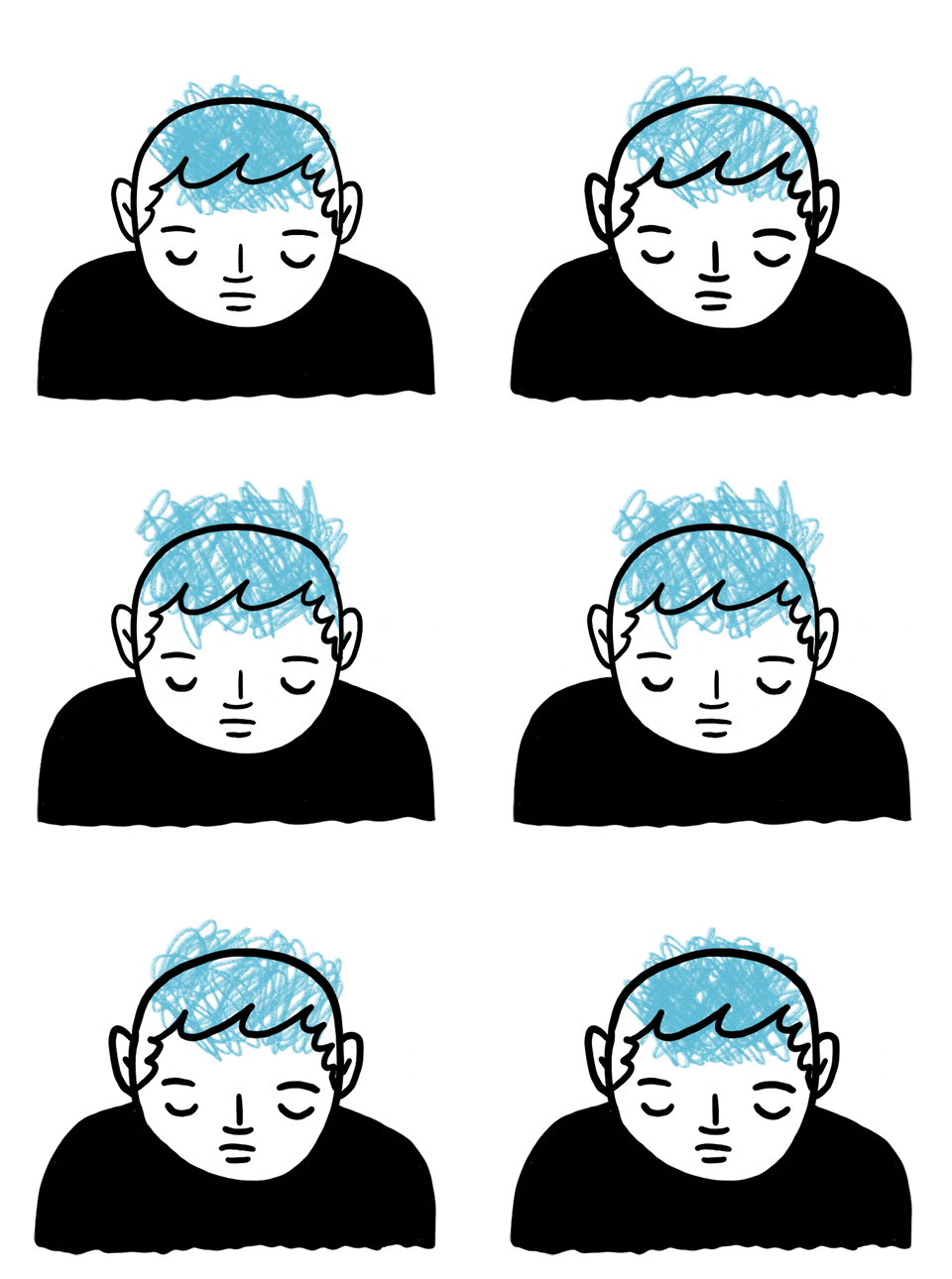
Hi all! I am back on week 12 of my blog. A lot of time has passed and I am officially doing blogs from my home now since all of my classes are now being taught virtually due to the coronavirus. Some key points we learned about this week were mental health issues and homelessness. A video we watched earlier in the week talked about homeless people on the streets of ‘Skid Row’ in LA which is one of the most dangerous cities in LA. Skid Row is referred to as America’s only Third World Country due to the high capacity of homeless people who live here with serious mental health issues. Thankfully, the homeless people are able to get help from the Union Rescue Mission which is the largest and oldest organization in the USA working to support the homeless people. The Union Rescue Mission take homeless people in to have some quiet time and get off the streets. The homeless are allowed to sign up for bids with the Union Rescue Mission to get 3 meals a day, a shower, fresh clothes and medical care. Therapists reside at the Union Rescue Mission and are on hand to assist the mental state of those who turn up to the Union Rescue Mission. 30% of homeless people suffer from some sort of mental health issue which raises a lot of concern for the people trying to help the homeless. In all, this video opened my eyes up to a lot of things I didn’t already know about people who suffer from homelessness and some sort of mental health issue and I think it is a very important topic to be aware of. We all need to do our part and help people in need no matter what issue they might be dealing with.

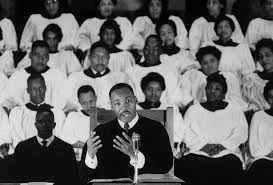
Hi and welcome back to week 6 of my blog! This past week we learned about how the black church provided crucial support to the emerging civil rights movement. The black church provided critical support to the emerging civil rights movement in that they were able to support their own ministers. Although not all black ministers committed their churches to the movement, a sizable number of the new urban ministers were educated middle-class devotees to a radical theology stressing social activism, and these ministers became key leaders of the civil rights movement. The black church also provided leadership, meeting places, and numerous cultural resources which were all very important during the civil rights movement. Many young people provided key roles in the civil rights movement. For example, in 1960, large number of black students participated in waves of sit-ins that galvanized the civil rights movement and stimulated increased participation by white and black students in the northern United States. Black students founded the student nonviolent coordinating committee (SNCC) and organized numerous campaigns, including freedom summer, which brought hundreds of northern white students to Mississippi in 1964 to register black voters and fight for civil rights in the state. Various tactics were used by the youth participating in various social movements in Canada, France, the United States, Britain and Germany. In Canada, students first mobilized around the anti-nuclear issue in 1959, developing a view of “the common welfare over partial interests, of humanity over politics” that would become central to the larger university movement of the 1960s. In France, massive mobilizations of students began during the Algerian War, which lasted from 1954 to 1962, to support the Algerian National Liberation Front. Students in the United States began organizing on campuses in the late 1950s to support civil rights movement and to protest U.S. Cold War policies. In Britain, teach-ins about the war were held at the London School of Economics and at Oxford in the summer of 1965 in support of the American anti-war movement. Finally, in Germany, they adopted tactics such as sit-ins and teach-ins, styles of dress, and their own versions of slogans from the American New Left and black power movements. In all, many groups of people provided the civil rights movement with much support and guidance. Thank you for tuning in and I will be back shortly.
Hi welcome back to week 5 of my blog! This past week we studied a lot about street art and activism with ‘The Slumlord Project’ in Baltimore. One theory we focused on was the Broken Windows Theory. This theory is entails visible signs of crime and anti-social behavior that creates an urban environment to encourage further crime and disorder. We also focused a lot on The Slumlord Project. The Slumlord Project was focused on aiming to renew the social contract in communities hit hard by crumbling real estate, crime and diminished opportunity. A lot of attention was focused on abandoned homes. Seventeen artists took on the project of going around to these abandoned homes and spray painted them to help bring them back to life. Some projects we studied within The Slumlord Project were the Harelequinade, Nanook, Jetsonorama and Stefan Ways. The Harelequinade catalyzes a larger conversation about Baltimore’s ignored vacancy issue. Nanook combines art and activism. It installs unauthorized artwork on various dilapidated vacant houses. In the Jetsonorama, the lyrics of the song appear around the outside of the photo as a shoutout to the city and Stefan Ways is a mixed-media piece of a Raven building a nest. Thank you for tuning in and I will be back next week with more exciting information.
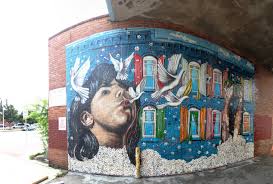
#streetart Street Art and Activism with "The Slumlord Project" in Baltimore http://t.co/Q98K8rbVgl
— Brooklyn Street Art (@BKStreetArt) October 9, 2013
One issue we focused on this week was the Kony2012 video. Kony2012 was a film created to make the Ugandan cult and militia leader Joseph Kony known so they could have him arrested by the end of 2012. Joseph Kony kidnapped over 30,000 children to strengthen his army. He forced the boys to become soldiers and the girls to become sex slaves. He was the head of the LRA also known as: ‘Lord’s Resistance Army’. Many campaigns were created to stop Kony2012. I included an instagram picture and a twitter caption down below involving the issues of Kony2012. Stay tuned next week to see what I have in store.
A post shared by dlaman_bundle (@dlb_thrift.store) on Jan 21, 2020 at 9:02am PST
We need to stop Kony. It's getting out of hand. #Kony2012
— David Otterson (@DOtterson_) August 4, 2016
In this past week’s class we learned about various theories of social movements. One theory that we learned about was the Collective Behavior Theory. This theory is often labeled as ‘strain’ or a ‘breakdown’ theory because they tend to posit that collective behavior comes about during a period of social disruption, when grievances are felt, rather than being a standard part of a political process. Some examples of strain movements are the Black Lives Matter and the Me Too movements. The Black Lives Matter movement is an activist movement that campaigns against violence and racism towards black people. Whereas, the Me Too movement is a movement against sexual assault and sexual harassment. According to the Chicago School Perspective, collective behavior develops in situations where established systems of meaning and sources of information have broken down, forcing participants to construct new meanings to guide their behavior. Some other key points we learned about were the six determinants of Theory of Collective Behavior. The six determinants are: structural conduciveness, structural strain, growth and spread of generalized belief, precipitating factors, mobilization for action and social control. Structural conduciveness permits or encourages certain types of collective behavior. Structural strains create real or anticipated deprivation. The growth and spread of generalized belief makes the situation meaningful to potential participants in collective behavior. The generalized belief identifies the source and nature of the strain and suggests possible responses. Precipitating factors give the generalized beliefs a concrete target for collective action. Mobilization for action notes that leadership is very important in mobilizing participants. Finally, social control may act to prevent the collective behavior, by minimizing strains, or to limit the scope of the collective behavior. One version of the collective behavior theory is the mass society theory. This is a theory that views collective behavior as an extreme response to social isolation. A ‘mass society’ is one in which there are few secondary or intermediate groups. Various criticisms have been directed at the mass society theory. For example, some criticisms that have been directed are that individuals become isolated from social and political institutions. This is a quick little snip it of some of the movements and theories we have studied this past week in class. I hope you all will stay tuned in for more upcoming weekly blog posts for Civic Media. Until next time!
This is an example post, originally published as part of Blogging University. Enroll in one of our ten programs, and start your blog right.
You’re going to publish a post today. Don’t worry about how your blog looks. Don’t worry if you haven’t given it a name yet, or you’re feeling overwhelmed. Just click the “New Post” button, and tell us why you’re here.
Why do this?
The post can be short or long, a personal intro to your life or a bloggy mission statement, a manifesto for the future or a simple outline of your the types of things you hope to publish.
To help you get started, here are a few questions:
You’re not locked into any of this; one of the wonderful things about blogs is how they constantly evolve as we learn, grow, and interact with one another — but it’s good to know where and why you started, and articulating your goals may just give you a few other post ideas.
Can’t think how to get started? Just write the first thing that pops into your head. Anne Lamott, author of a book on writing we love, says that you need to give yourself permission to write a “crappy first draft”. Anne makes a great point — just start writing, and worry about editing it later.
When you’re ready to publish, give your post three to five tags that describe your blog’s focus — writing, photography, fiction, parenting, food, cars, movies, sports, whatever. These tags will help others who care about your topics find you in the Reader. Make sure one of the tags is “zerotohero,” so other new bloggers can find you, too.

 Civic Media Blog